Finding a home can be quite the emotional rollercoaster. There’ll be many homes you’ll see and love, but for one reason or another, a home that you were excited about seeing online, just isn’t that great in real life. Maybe the yard is too small, or the layout is weird. Maybe it feels closed in or possibly the neighborhood seems too crowded. Sometimes you can be overwhelmed by what’s out there as well. Do you want a big yard or a small one? Are you looking for a home or a condo? What type of flooring are you wanting? What area do you want to live in? So many things to consider. Knowing that a home is a long-term commitment, you definitely want to make the best choice when it comes to selecting a home.
Define Your Needs: What are you looking for in a Reno home?
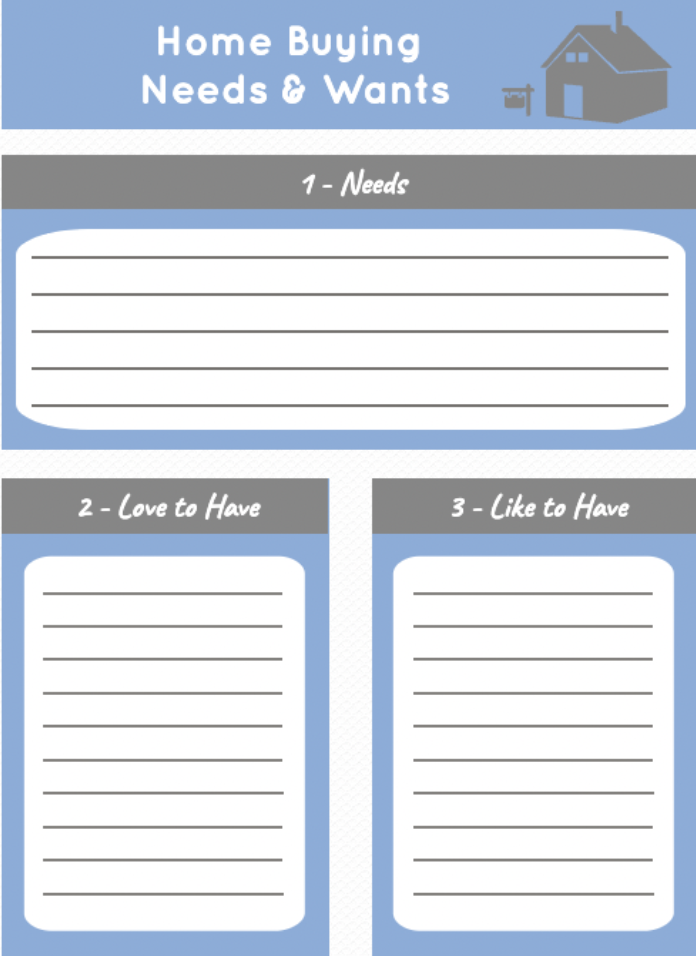
Because there are so many variables that go into selecting a home, it’s important to put together a list of what you’re looking for. This list would include the area, the type of home, what features and amenities you need, the price range, school districts, etc. Once you’ve written all this down, start to separate these items into two categories; needs and wants. Your needs list should consist of all the non-negotiables. Let’s say you need a home with RV parking so you have a place to park your trailer, this may be a non-negotiable. Another example would be school zones. Maybe you want to make sure that your kids can attend the school of your choice. This list should be short by design, and usually include what I call the big three:
1 - Location/Area
2 - Size/Home Type
3 - Budget
Having this list put together is the best way to know what is most important to you and what shouldn’t bend on. Let’s go a little deeper into the big three.
Location/Area — Proximity to Reno/Sparks?
Location is going to be the most important thing when looking for a home. You want to take into consideration all aspects of different locations. Here are ten questions you may want to ask yourself when considering location:
- Is it close to work?
- Is it close to and zoned for the schools you want?
- Does it back up to a busy street?
- Is it in a crowded neighborhood, or are the homes spaced out?
- Does it have easy access to freeways?
- Is it close to parks, shopping, or hospitals?
- Does it have a good walk score?
- Is it close to hiking trails?
- Is there potential for future increase of value?
- Most importantly, do you like the area?
Finding the area, you want might be difficult at first, and depending on the market conditions, you might have to be flexible on some of the above items, but this list will help guide you when determining a location to live in.
Size/Home Type
Once you’ve selected your area, you now want to select what type of home you need. How big does it need to be? Do you need land? How many bedrooms and bathrooms do you need? These are all questions you’ll need to answer based on your family’s needs. In addition, you’ll need to know what type of home you’re looking for. Answers to the above questions should help you narrow that down. For instance, if you need a place to park your RV, a condo or townhome are not going to work out very well. You’ll most likely be looking at a stick built or manufactured home.
When buying a home, there are four basic types of homes to choose from, and each with their own set of pros and cons. Let’s take a look:
Stick Built - This is your standard home. It has a foundation and is built from the ground up. You own the home and the land. It is a single unit and isn’t attached to any other homes.
Pros - More privacy, you don't share a wall with a neighbor, there is yard space, greater potential for growth in value.
Cons - Maintenance costs are higher (roofs, siding, HVAC, landscaping, etc.), higher priced.
Manufactured Home - This is when a home is built in a factory, and then delivered to an empty lot. Once there it is put together and placed on a permanent foundation. Just like stick built homes, you would own the home and the land.
Pros - Usually they’re less expensive. It’s common for these homes to be on larger lots. You’re not attached to a neighbor.
Cons - Because these homes have to be delivered from a factory, they are built in a manner that makes them lite-weight and are not as sturdy as your typical stick built home. They don’t hold their value as well as a stick built home.
Townhomes- These are homes that are attached to other homes and share various elements in common, such as roofs, siding and foundations. Even though your home is attached to your neighbor, you still own the land that your home sits on.
Pros - Maintenance costs are low because the outside is maintained by a homeowners’ association. More affordable than a stick built or manufactured home. Because townhomes come with land, they’re more likely to have a small yard. Townhomes are single units that don’t have units above or below.
Cons - HOA fees can get pretty high, the land attached to the property can be small. They share a wall with at least one neighbor, possibly two.
Condominiums - Much like townhomes where there will be units on both sides, they can also be stacked. And this because with a condo, you only own the air space. The land under the building is owned by the HOA. So, everything inside your unit is your property, everything else property of the home owner’s association. Many condos have decks or patios that are part of the units and can be used for outdoor space.
Pros - Less expensive than most other forms of real estate. Maintenance costs are low. A lot of condos have community pools, parks, gyms, etc.
Cons - HOA fees can be expensive. There can be neighbors above, below and on both sides. Due to various lending guidelines, it can be hard to get financing for a condominium.
The type of home you want will tie into the area as well. Many towns and cities are sectioned off into different zones that only allow one type of housing or another. For instance, a suburban part of town may only allow stick built homes while the downtown area may only allow condominiums. You’ll find similar styles of homes will be clustered together in different areas.
Budget
Area will also tie into budget. The number one determinant of any piece of real estate is its location. Therefore, you’ll need to find a location that fits your budget. When deciding on a budget to look for homes, it’s always best to look for homes just a little bit below your top end budget. For instance, if the high end of your budget is $450,000, it would be a good idea to look at homes in the $420,000 to $430,000 range. This way, you’ll have some wiggle room in case you have to go over the list price, or in case you need to save money to do upgrades like new paint or flooring. In a seller’s market, starting in a lower price range is a great way to get ahead of the market. It’s common for many buyers to start at the top of their budget, only to be let down when they get beat out by other buyers with more purchasing power. The other danger of chasing homes that are at the top of your budget and slightly out of reach is; the homes in the lower price range are quickly moving up in value and will soon be in the price range where you are stuck spinning your wheels. It would’ve been easier to purchase a similar home a couple months earlier when it was $10,000 to $20,000 cheaper.
In a buyer’s market, your budget strategy would be different. You could start your home search at a price that is a little bit above your budget. The reason being is because in a buyer’s market, there is a lot more inventory available than there are buyers, this causes homes to sit on the market longer, and in turn, sellers will drop their prices. When looking at homes in a buyer’s market, if it’s a little bit above your price range, and the home has been on the market for a while, there is a good chance that you can talk the seller down on price, therefore getting more home for your money. Also, when homes are overpriced, a lot of buyers ignore them. This gives you the opportunity to negotiate with the seller without any real competition. In either market, you’ll need to land on a number that you feel comfortable with, since buying a home is a long-term commitment.
Wants
The next list is your wants list. This list consists of all the items you want in a home, but don’t necessarily have to have. Where the needs list consists of items that can’t be changed, items like type of home, size of home, and location, the wants list can be more fluid. They can be things that depending on the circumstance, you’d be willing to compromise on them. For example, something you really want is wood floors, but you found a home that is in the neighborhood you love, but it’s carpeted throughout. Even though it’s not something you want, you’ll definitely consider it since it is $20,000 less than the other homes you’ve looked at. It might be worth it to you to buy the less expensive home and put the wood flooring in afterward.
Another situation could be that in a low inventory market, there just aren’t enough homes available, so waiting for the perfect home that has everything you want could be detrimental. In the time you spend looking for a home that has it all, prices will rise, and you’ll find it harder and harder to find anything that will work. On the other hand, in a high inventory market, there may be so many options that you may feel like there is a more perfect home out there, and you pass over many great opportunities in search of it.
In a lot of cases, buyers get about eighty percent of all their wants, and then have to compromise on the rest. Whether it be painting the home new color, adding hardwood floors, relandscaping, etc. Unfortunately, unless you build a custom home, getting one-hundred percent of what you want is unlikely, and even then, there are things that homeowners want to change over time. With that in mind, you’ll want to write down all your wants on a list and put them into two categories, love to have, and like to have. This will help you prioritize what is most important, and will give you clarity when looking at different homes.
Whether this is your first home buying experience, or your tenth, the process for buying a home is very emotional and can cause a lot of stress. Taking the time to evaluate your needs and your wants, and deciding what is and isn’t negotiable, will not only save you time, but it will make your decision-making process easier.
Bonus: Click Image Below for A Needs/Wants Worksheet